

What Seat Covers Fit My Car? A Complete Vehicle Fitment Guide
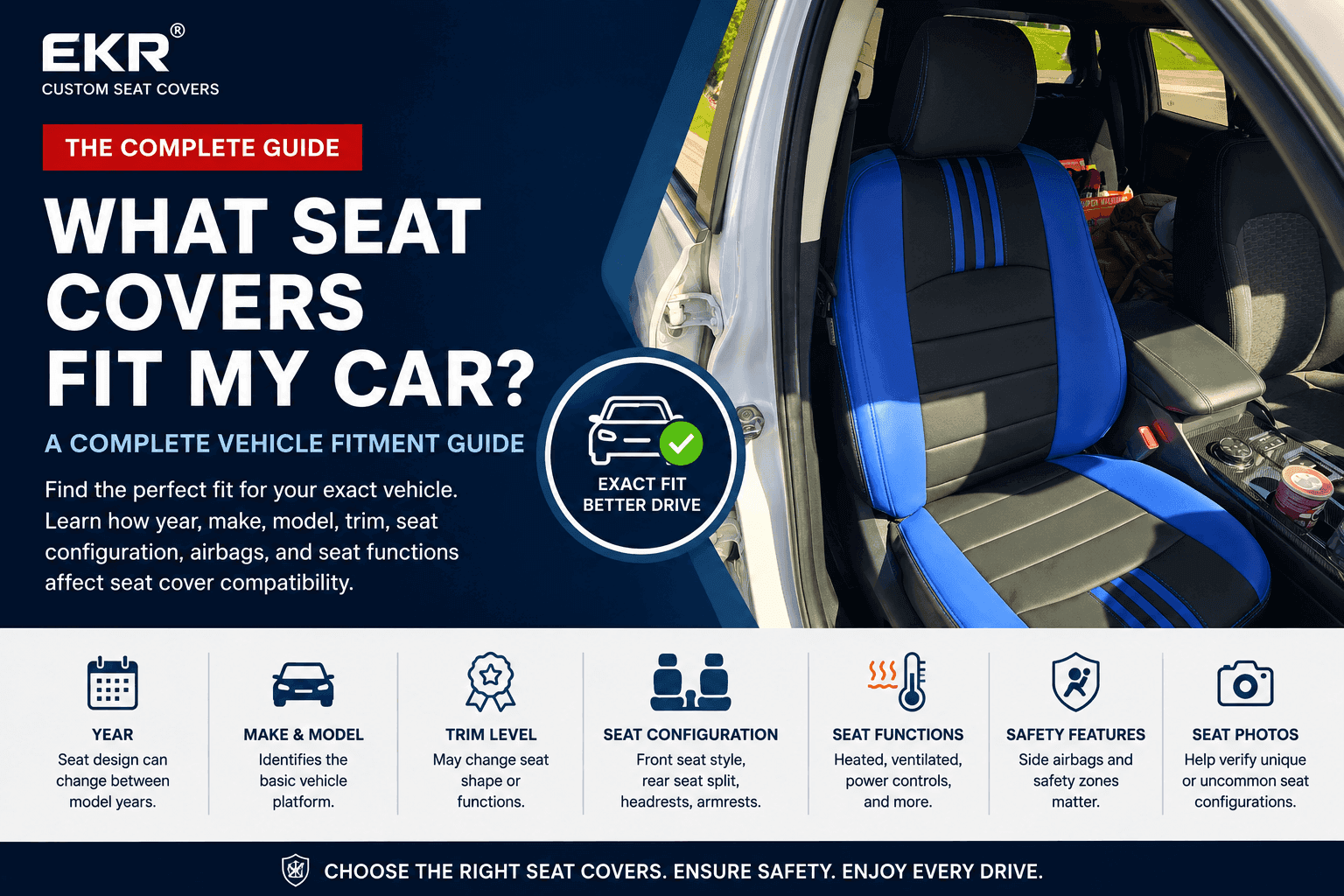
Year, make, and model are the starting point—but they are not always the whole story. Trim, seat shape, rear-seat split, headrests, armrests, climate-control functions, and other factory features can all affect which seat cover pattern fits correctly.
How do I know which seat covers fit my car?
Start with your exact year, make, model, trim, and seat configuration. Then confirm details such as front-seat shape, headrests, rear-seat split, armrests or center consoles, side-airbag locations, and heated or ventilated seat functions.
Two vehicles with the same model name and model year can still use different seat layouts, so vehicle-specific fitment should be confirmed before ordering instead of choosing by model name alone.
8 Things to Confirm Before Ordering Seat Covers
The more accurately the original seat configuration is identified, the easier it is to select the correct vehicle-specific cover.
Why Year, Make and Model Are Not Always Enough
The vehicle name identifies the platform. Seat-cover fitment depends on the actual seat structure inside it.
| What to Check | Why It Matters | What Can Be Different | Best Action |
|---|---|---|---|
| Model Year | A redesign or model update can change the seat pattern. | Bolsters, headrests, rear bench, controls | Select the exact model year. |
| Trim Level | Different trims may use different factory seats or functions. | Seat shape, ventilation, controls, upholstery | Confirm the exact trim before checkout. |
| Front Seat Shape | Custom-fit panels follow the original contours. | Leg rests, bolsters, integrated headrests | Compare your seats with listing photos. |
| Rear Seat Layout | The rear-cover pattern must match the split and folding structure. | One-piece, 40/60, 60/40, center armrest | Check the entire rear backrest from side to side. |
| Headrests | Shape and removability affect pattern openings. | Fixed, removable, integrated, different sizes | Confirm front and rear headrest types. |
| Armrests / Console | Moving sections may require separate cover pieces. | Fold-down armrest, console lid, center seat | Check what the product package includes. |
| Heated / Ventilated Seats | Material and seating-surface design affect airflow and heat transfer. | Heating only, ventilation, or both | Confirm the correct configuration and perforation option. |
| Side Airbags | Seat-mounted airbag zones require compatible construction. | Airbag location varies by vehicle | Use the correct vehicle-specific pattern. |
Start With the Exact Vehicle
Begin with the exact year, make, and model—not simply the generation or another vehicle that looks similar. Seat structures can change between model years even when the exterior remains almost identical.
Does Trim Level Matter?
Sometimes, yes. Trim level can affect the seat itself—not just badges or exterior styling.
Sport, luxury, off-road, hybrid, or premium trims may introduce different bolsters, upholstery, controls, ventilation, armrests, or rear-seat structures.
If the seat-cover listing separates trims, select the exact trim. If your seats look different from the product photos, confirm fitment before ordering.
Check the Entire Front Seat
Look beyond the center seating surface. Important details include the headrest, upper backrest, side bolsters, cushion front edge, adjustment controls, armrests, and any extendable thigh support.
These features affect where seams, openings, fastening points, and cover edges need to sit.
Check Seat Functions Before Ordering
Modern seats can include heating, ventilation, power controls, folding mechanisms, occupancy sensors, child-seat access points, and seat-mounted airbags.
We design our custom-fit seat covers so factory heated and ventilated seat functions remain usable after installation. For compatible custom orders, perforated seating areas can be selected to support airflow through ventilated seats.
40/60, 60/40 or One-Piece? The Rear Seat Matters
Rear-seat configuration is one of the easiest details to overlook. Different versions of the same vehicle can use different folding directions, center armrests, headrests, or seat bases.
Designed Around Your Vehicle
- Pattern follows the selected vehicle and seat configuration.
- Better alignment around contours, headrests, controls, and moving sections.
- More integrated appearance for long-term use.
- Requires accurate vehicle selection before ordering.
Designed to Fit a Range of Vehicles
- Useful when broad compatibility and fast installation matter most.
- May leave more excess material or require adjustment.
- Less dependent on the exact trim or seat configuration.
- Practical for temporary or budget-focused use.
Do Not Guess—Use Seat Photos to Verify the Pattern
If your vehicle is newly released, uncommon, or your seats do not match the listing, clear photos can help us identify the original seat structure before production.
Before sending your photos, please review our Vehicle Photo Guide for Seat Cover Fit Verification to make sure the original seats, headrests, cushion edges, rear-seat structure, and other important fitment details are clearly visible.
- Remove existing seat covers, blankets, protective plastic, or anything else blocking the original seat.
- Make sure the photos are bright, clear, and not blurry.
- Show the full headrest, backrest, seat cushion, and front edge of the cushion.
- Include special details such as leg rests, raised cushion corners, armrests, or unusual seat structures.
- For rear seats, photograph the full backrest from side to side so we can confirm whether it is one-piece or split-folding.
- If relevant, also show the lower rear-seat base and foot area, especially when your vehicle has an unusual or model-specific rear-seat structure.
Frequently Asked Questions
How do I know what seat covers fit my car?
Match the cover to your exact year, make, model, trim, and seat configuration. Then verify front-seat shape, rear-seat split, headrests, armrests or consoles, heated or ventilated seat functions, and seat-mounted safety features.
Do all seat covers fit every car?
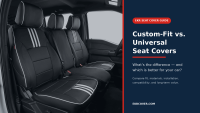
No. Universal covers are designed for a wider range of seats, while custom-fit covers use vehicle-specific patterns. A custom-fit cover should be selected for the exact vehicle and configuration listed for the product.
Can two cars with the same model year have different seats?
Yes. Trim, powertrain, seating package, row configuration, and optional equipment can change the seat shape or rear-seat layout within the same model year.
Does trim level matter when buying seat covers?
It can. Some trims use different bolsters, headrests, controls, ventilation, armrests, or rear-seat structures. If trim choices are shown on the product page, select the exact one.
What does 40/60 or 60/40 rear seat mean?
It describes how the rear backrest is divided into folding sections. Which side is smaller matters because a vehicle-specific cover needs to follow the same split and folding structure.
Can I use EKR seat covers with heated or ventilated seats?
Yes. Our custom-fit seat covers are designed so factory heated and ventilated seat functions remain usable after installation.
For compatible custom orders, perforated seating areas can be selected to support airflow through ventilated seats.
Are EKR seat covers compatible with seat-mounted side airbags?
Applicable EKR custom-fit designs are engineered around the original side-airbag locations and use dedicated breakaway / weakened seam construction in the deployment area.
We use specialized airbag stitching processes and German Dürkopp sewing equipment for these safety-critical seams. Correct vehicle selection and installation remain essential.
What if my vehicle is not listed?
Do not select a similar vehicle and assume the pattern will fit. Contact us with the exact vehicle details and clear photos of the original front and rear seats so the seat structure can be reviewed.
Follow our Vehicle Photo Guide for Seat Cover Fit Verification before sending the photos.
Should I send seat photos before ordering?
Photos are especially useful for newly released models, uncommon trims, special seating packages, or any vehicle whose seat structure does not clearly match the product listing.
Do I need my VIN to order custom-fit seat covers?
In most cases, the key information is your year, make, model, trim, and actual seat configuration. If additional information is needed to distinguish between seat layouts, our support team can tell you what to provide.
Useful EKR Guides Before You Order
Once fitment is confirmed, compare materials, safety compatibility, installation requirements, and customization options.
Choose Seat Covers for Your Exact Vehicle
A better fit starts before installation. Confirm your vehicle and seat configuration first, then choose the material, color, and design that fit how you actually use your car.
Select My Vehicle