
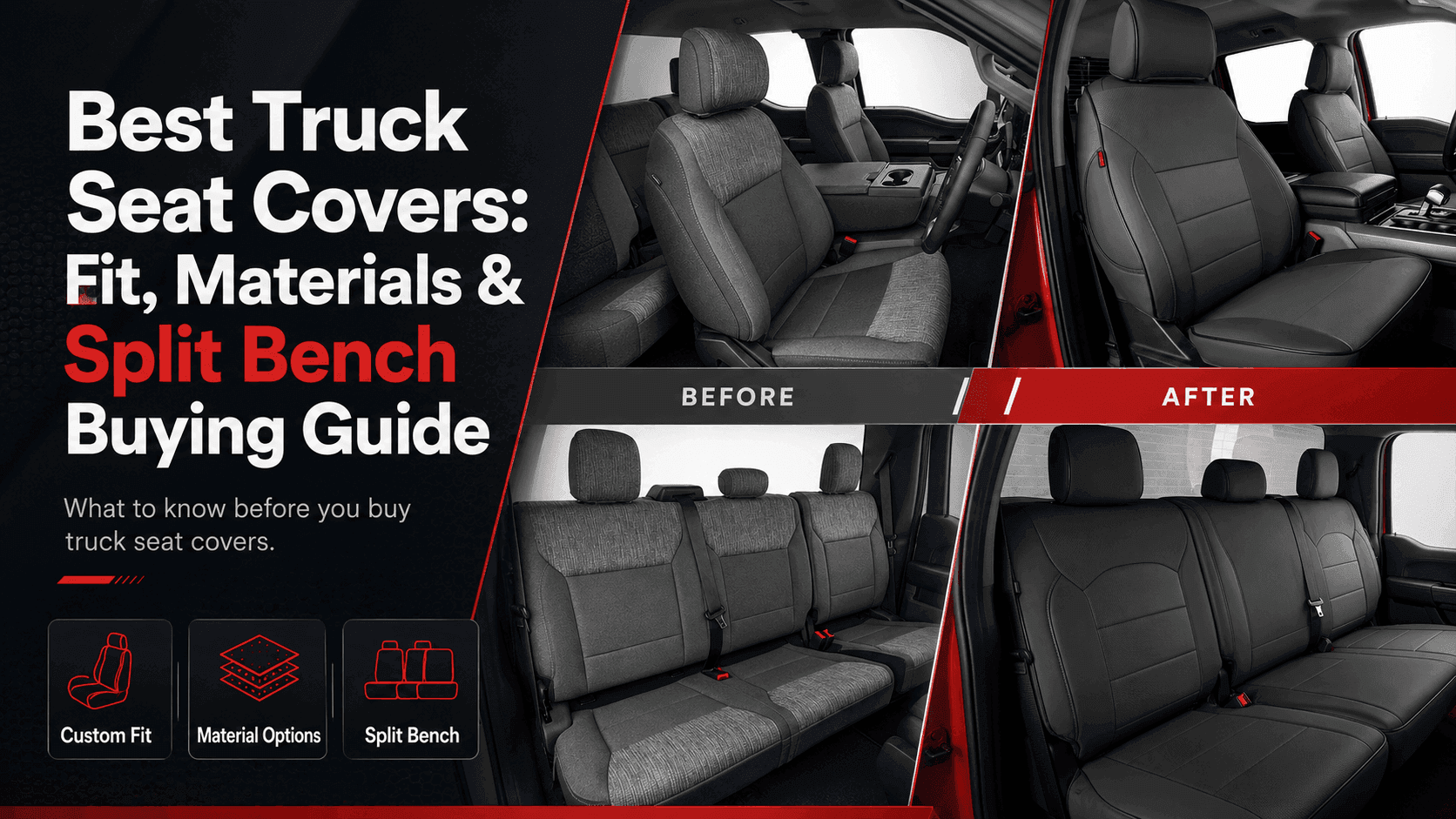
Truck seats come in many different layouts, from bucket seats and center consoles to 40/20/40 and 60/40 split benches. Choosing the right seat covers starts with understanding your actual seat configuration, daily use, factory features, and material needs.
What Seat Covers Should I Buy for My Truck?
The best truck seat covers depend on your exact truck, seat configuration, daily use, factory features, and material preferences. For trucks with 40/20/40, 60/40, or other split-bench layouts, vehicle-specific fitment is especially important.
Custom-fit covers are designed around individual seat sections, headrests, armrests, center consoles, seat belts, folding functions, and other vehicle-specific details, helping provide better coverage and a cleaner, more integrated interior appearance.
What Should You Look for in Truck Seat Covers?
Truck interiors often work harder than ordinary passenger-car interiors, so fit, protection, comfort, and daily-use requirements should be considered together.
Vehicle-Specific Fit
Check your exact year, make, model, trim, cab configuration, and seat layout before ordering.
Durability
Work, outdoor use, pets, tools, and frequent entry and exit can place extra wear on truck seats.
Easy Maintenance
Choose a surface that matches how often your truck is exposed to dirt, dust, spills, pets, or outdoor gear.
Comfort
Long commutes, job-site driving, towing trips, and road trips make material comfort important.
Factory Features
Check heated and ventilated seats, power controls, side airbags, split sections, and folding functions.
Interior Appearance
Vehicle-specific covers can provide a cleaner and more integrated appearance than broad universal-fit designs.
Why Truck Seat Layout Matters
Two trucks with the same model name may use different seating arrangements depending on model year, trim, cab type, and options.
What Is a 40/20/40 Split Bench Seat?
A 40/20/40 bench divides the seating area into three sections: two larger outer sections and a narrower center section. Depending on the truck, the center section may function as a seat, armrest, storage area, or folding console.
This layout requires more precise fitment because the cover may need to account for:
- Separate center-seat or console sections
- Seat belts and buckles
- Headrests
- Folding armrests
- Cupholders or storage features
- Independent seat movement
A cover designed for a simple full bench may not correctly accommodate a true 40/20/40 configuration.
Need a deeper look at this layout? Read our 40/20/40 Split Bench Seat Cover Guide .
Why Split Bench Seat Covers Need the Right Fit
Folding Sections
Individual seat sections should continue to move as intended without the cover tying separate sections together.
Center Consoles
Some trucks include folding center consoles, storage compartments, cupholders, or armrests within the bench.
Seat Belt Access
Buckles and seat-belt routing should remain accessible after installation.
Headrest Configuration
Headrest quantity and shape can vary between model years, cab styles, and trim levels.
Which Is Better for Truck Seats?
Swipe horizontally to compare →
| Feature | Custom-Fit Truck Covers | Universal Truck Covers |
|---|---|---|
| Fitment | Designed for a specific truck and seat layout | Designed for broad vehicle compatibility |
| Split Bench | Can follow individual seat sections | May not match complex bench layouts |
| Center Console | Vehicle-specific designs can account for console areas | Compatibility depends on the individual product |
| Appearance | Cleaner, more integrated appearance | More general cover appearance |
| Factory Features | Designed around vehicle-specific considerations | Compatibility varies by product |
Best Seat Cover Materials for Different Truck Uses
The right material depends on how you use your truck, the interior feel you prefer, and how much maintenance fits your routine.
Swipe horizontally to compare →
| Material | Main Strength | Best For | Maintenance |
|---|---|---|---|
| Solvent-Free Leatherette | Durable, practical, and easy to maintain | Daily driving and family trucks | Easy everyday wipe-down |
| Genuine Leather | Genuine leather on the main body-contact seating surfaces for a more premium feel | Premium daily-driver trucks | Requires appropriate leather care |
| Full-Grain Nappa Leatherette | Soft-touch comfort with a refined leather-look finish | Daily driving and interior upgrades | Easy to wipe and maintain |
| Neoprene | Flexible protection suited to active use | Outdoor and active lifestyles | Practical for frequent use |
| Canvas | Rugged wear resistance | Work trucks, pets, and demanding use | Suited to heavy-use environments |
| Polyester Fabric | Breathable fabric comfort | Everyday driving and warmer climates | Generally easy to maintain |
Compare EKR Seat Cover Materials
EKR genuine leather designs use genuine cowhide on the main body-contact seating surfaces, with high-quality synthetic leather used on selected side, back, and supporting areas.
What Type of Truck Driver Are You?
Work Truck
Prioritize wear resistance, easier cleaning, and protection from tools, dust, and frequent entry.
Family Truck
Look for easy-maintenance surfaces that help protect seats from drinks, snacks, pets, and daily wear.
Outdoor Truck
Consider materials suited to moisture, dirt, outdoor gear, and active use.
Premium Daily Driver
Prioritize interior appearance, comfort, vehicle-specific fit, and material quality.
Explore Truck Seat Covers by Model and Seat Layout
Truck model names alone do not confirm compatibility. Model year, trim, cab configuration, and actual seat structure still need to be verified.
Not Sure Which Split Bench Your Truck Has?
Do not guess based only on the truck model. Clear photos of the front and rear seats can help verify the actual bench split, center console, headrests, armrests, buckles, and other important details.
See How to Take Vehicle Photos for Seat Cover Fit Verification
Heated Seats, Ventilation, Controls, and Side Airbags
The right truck seat cover should be selected with the original seat functions in mind, not only the seat shape.
Heated & Ventilated Seats
EKR custom-fit seat covers can be used while retaining factory heating and ventilation functions. Material choice and original seat construction can affect how quickly heat or airflow is perceived.
Seat-Mounted Side Airbags
For applicable EKR custom-fit designs, designated seat-mounted side-airbag areas use specialized construction around the original airbag location. Correct vehicle selection and installation remain essential.
Power Controls
Power-seat switches, adjustment controls, levers, and other access points should remain usable after installation.
Split & Folding Functions
Rear seats, center sections, armrests, consoles, and fold-down areas should continue to operate independently as intended.
Before You Buy Truck Seat Covers
- Confirm year, make, model, trim, and cab configuration.
- Check whether the seats are bucket, full bench, 40/20/40, 60/40, or another layout.
- Check headrests, armrests, center consoles, buckles, and folding sections.
- Confirm heated, ventilated, power, and airbag-equipped seats.
- Choose material based on work, family, outdoor, or daily-driving needs.
- Use clear seat photos when fitment is uncertain.
Truck Seat Cover FAQs
What are the best seat covers for a truck?
The best option depends on the truck's exact seat layout, daily use, material preference, and required factory-feature compatibility. Vehicle-specific custom-fit covers are especially useful for trucks with more complex seating configurations.
Do split bench seats need special seat covers?
The cover should match the actual split configuration so individual seat sections, seat belts, armrests, consoles, and folding functions can remain usable.
What does 40/20/40 mean on a truck seat?
It describes three separate seat sections: approximately 40 percent on one side, a narrower 20 percent center section, and 40 percent on the other side. The exact design and function vary by vehicle.
Can universal covers fit a 40/20/40 truck seat?
Some universal products may offer broad compatibility, but they may not align precisely with individual sections, consoles, folding functions, or other vehicle-specific details.
How do I know which seat configuration my truck has?
Check the actual seat structure rather than relying only on the model name. Look at the number of seat sections, center console or armrest, headrests, folding areas, buckles, and seat-belt positions.
What material is best for a work truck?
Drivers who prioritize rugged daily protection often look for durable, easy-maintenance materials such as canvas or other wear-resistant options. The right material still depends on comfort, climate, and maintenance preferences.
Can truck seat covers work with heated and ventilated seats?
Yes. EKR custom-fit seat covers can be used while retaining factory heating and ventilation functions. Material selection and original seat design may affect the perceived speed or intensity of heating and airflow.
Can truck seat covers work with seat-mounted side airbags?
Applicable EKR custom-fit designs account for the original seat-mounted side-airbag location with specialized construction in the designated area. Correct vehicle selection and proper installation are essential.
What if I'm not sure which cover fits my truck?
Provide the truck year, make, model, trim, cab type, and clear photos of the front and rear seats for fitment verification rather than guessing based on a similar configuration.
Find the Right Seat Covers for Your Truck
Start with your actual truck and seat configuration, then choose the material and protection level that match how you work, travel, and drive.
Find Seat Covers for My Truck


The information below is required for social login
Sign In
Create New Account